THE JOURNEY OF THE GLOBAL BROTHERHOOD
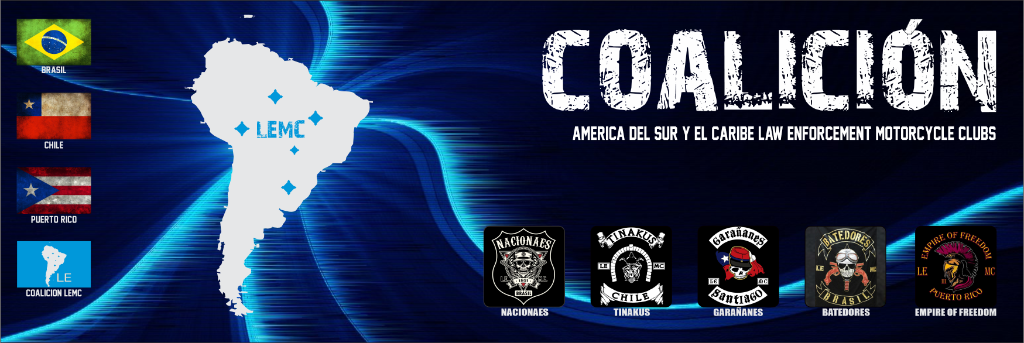
On September 30, 2015, a new alliance began to take shape in the universe of Law Enforcement motorcycling. What started as an initiative between clubs from Brazil and Chile quickly evolved into something much larger, with the joining of Puerto Rico in November of the same year.
n September 30, 2015, a new alliance began to take shape in the universe of Law Enforcement motorcycling. What started as an initiative between clubs from Brazil and Chile quickly evolved into something much larger, with the joining of Puerto Rico in November of the same year. The group's flag and its name reflected this unifying spirit, evoking regional identity and the concept of a brotherhood without borders. The coalition's operation also followed this philosophy, adopting a management model based on pro-tempore presidency — a dynamic system in which the group's leadership is the responsibility of the host moto club of the next meeting.
Over the years, the coalition expanded its presence, bringing together clubs from various countries and strengthening the bonds between motorcyclists who share the values of loyalty, honor, and respect. This model allows each meeting to be unique, promoting the exchange of experiences.
Regional integration: Brazil, Chile, and Puerto Rico as the founding base.
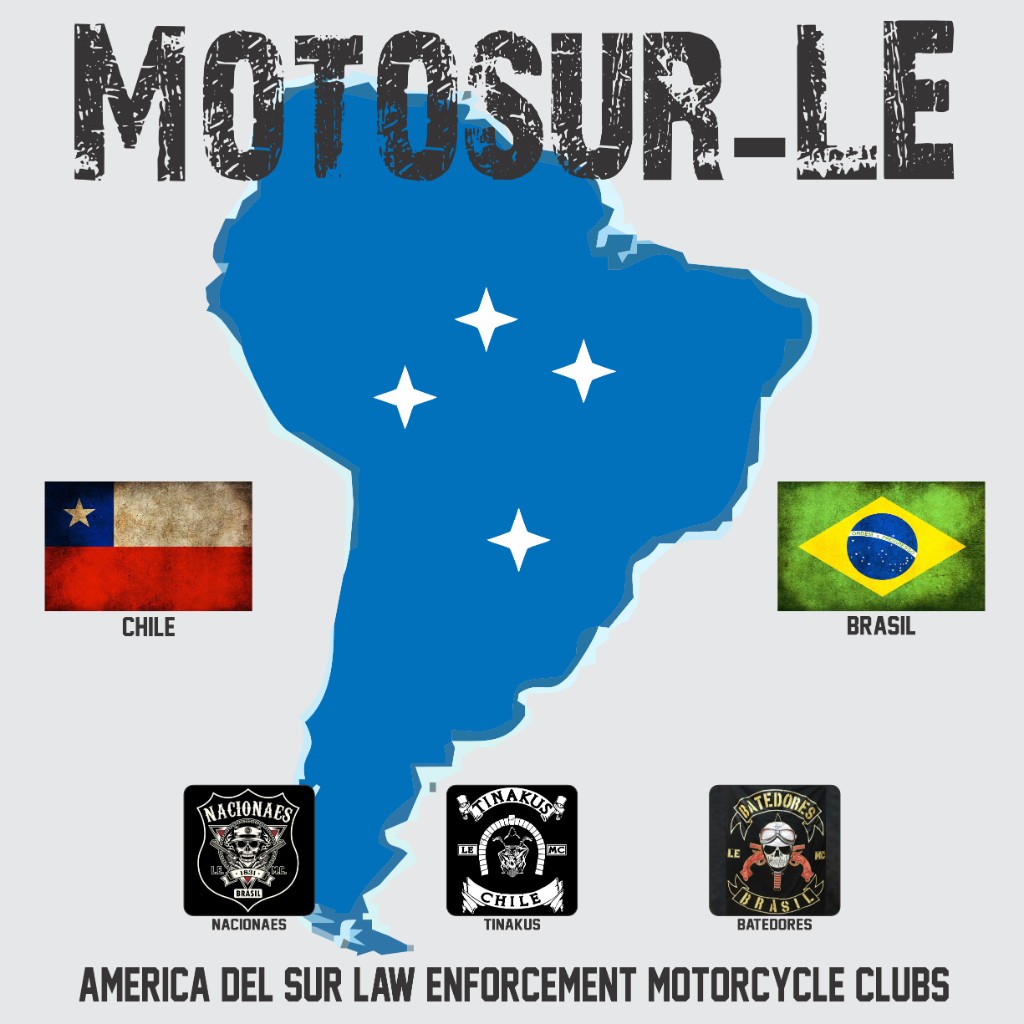
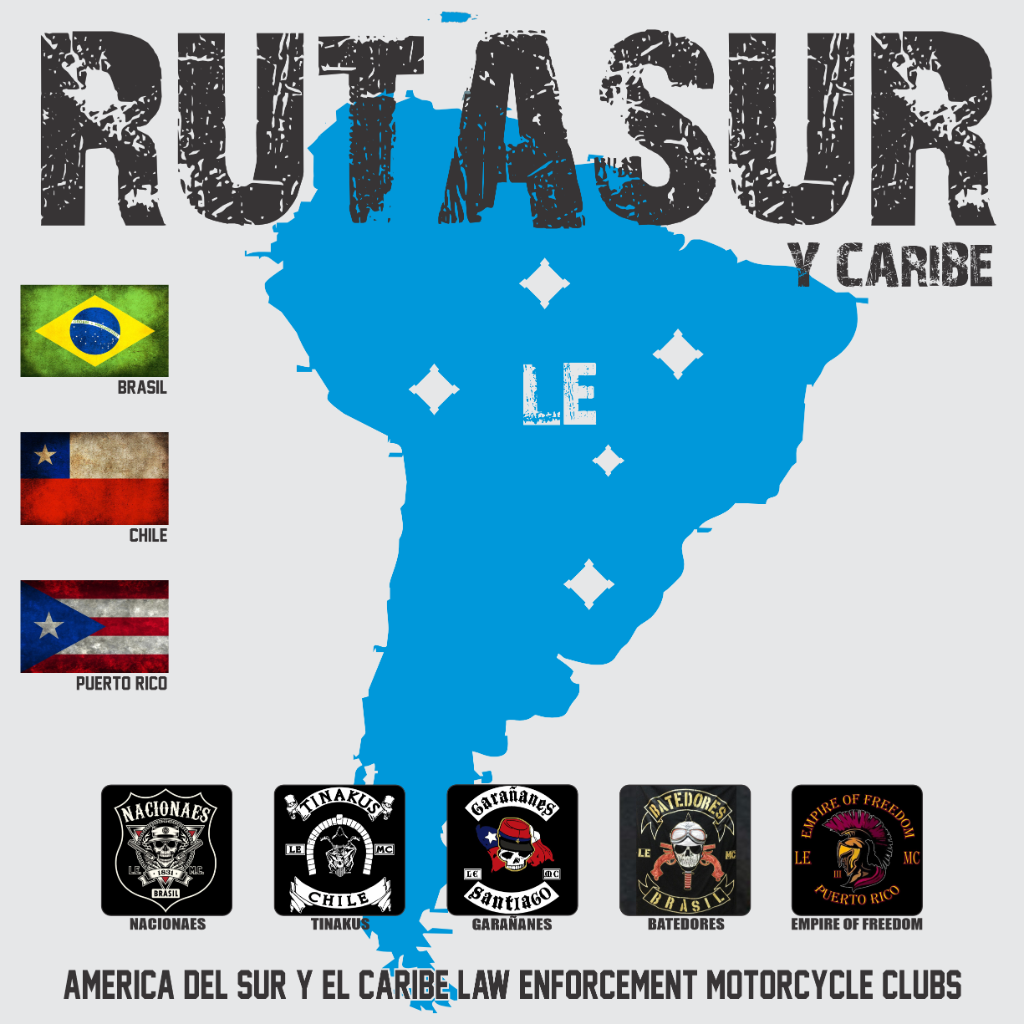
The organization's name accompanied this evolution, adapting to reflect its growing credibility and international reach. Initially called MOTOSUR-LE, it quickly changed to RUTASUR y Caribe after Puerto Rico joined. For a short period, it was named Alianza Interamericana LEMC.
Inspired by the international military coalition that was fighting ISIS at the time, the group adopted the name Inter-American Coalition of Law Enforcement Moto Clubs. Global consolidation occurred with the joining of Germany, Belgium, the United States, and Slovakia, at which point the group became known by its definitive name: International Coalition of Law Enforcement Moto Clubs.
Historical Meetings
- 2015: Chile (Baptism as an LE club of the former Tinakus MC)
- 2016: Brasília (II Meeting) & Chile (III Meeting)
- 2017: Rio de Janeiro and Cabo Frio (IV Meeting)
- 2018: Chile (V Meeting - Tribute to Marcos Braz, BOPE)
- 2019: Florida, USA (VI Meeting - Daytona Bike Week)
- 2022: United States (VII Meeting - Post-Pandemic Revival)
The crest of the International Coalition of Law Enforcement Moto Clubs is a peaked shield, with the upper wings facing outwards and the lower third pointed. This format evokes the tradition of honor and protection.
The shield is horizontally divided into two parts. The upper portion, or chief, is gules (red), symbolizing courage and rescue forces. On this field, the capital letters "LEMC" are arranged in argent (white).
The lower portion of the shield is blue, the color of loyalty, representing police forces. On the blue field, a wavy silver band draws the path of a road without borders, symbolizing a free path, without limits, and the brotherhood that unites members regardless of their origins.

Symbol of Honor, Courage, and Unity